
Endangered Species Hidden in West Africa “The Roloway Monkey’s Quiet Battle for Survival” 8 Wake-Up Calls
To many people, endangered species are the iconic animals that dominate documentaries and conservation campaigns. Yet countless other species are quietly disappearing with little public attention. The Roloway Monkey is one of them. Native to the tropical forests of Ghana and Côte d’Ivoire, this striking primate is now one of Africa’s rarest monkeys. Once common across West Africa, its numbers have fallen dramatically, leaving only small and fragmented populations struggling to survive.
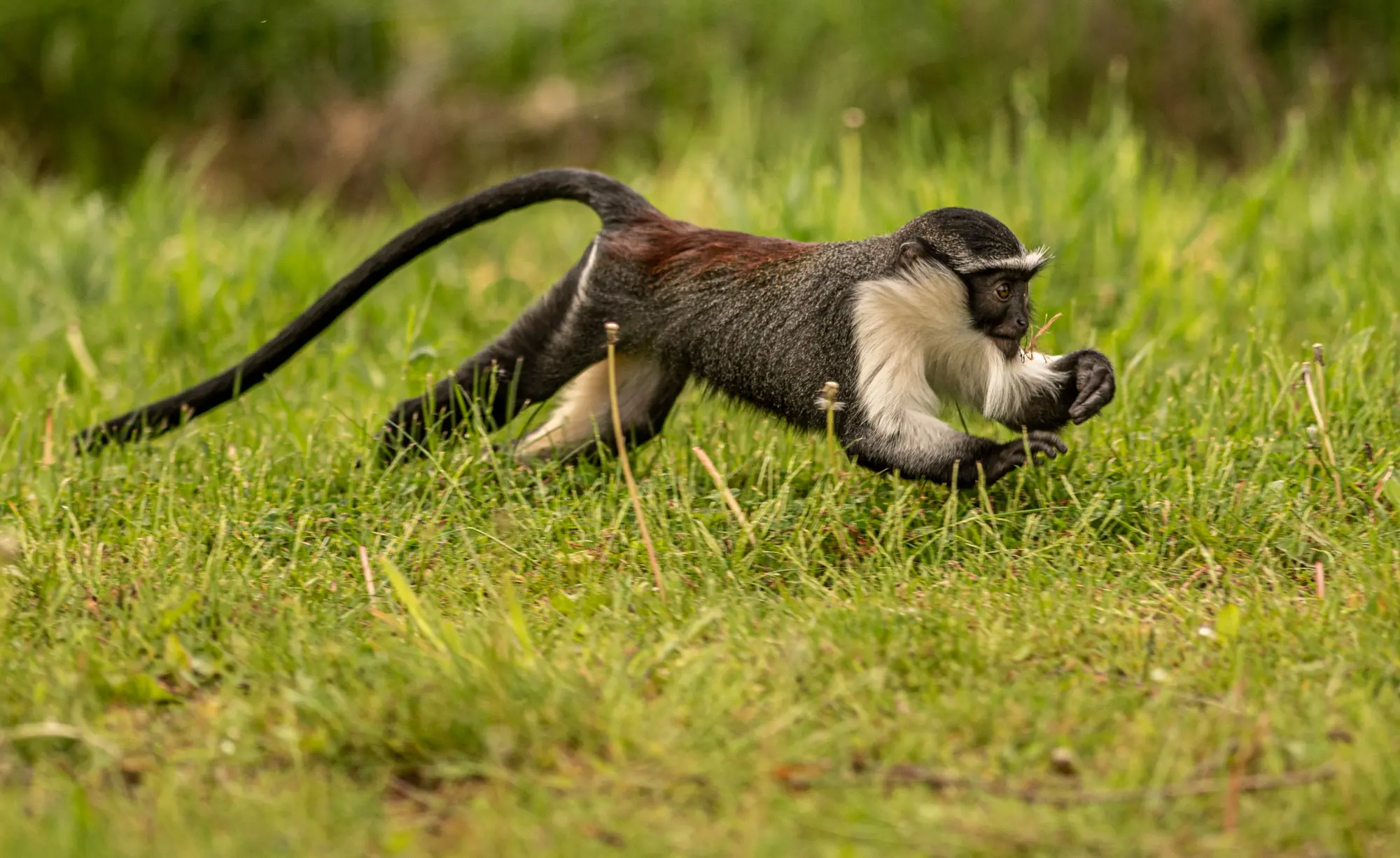
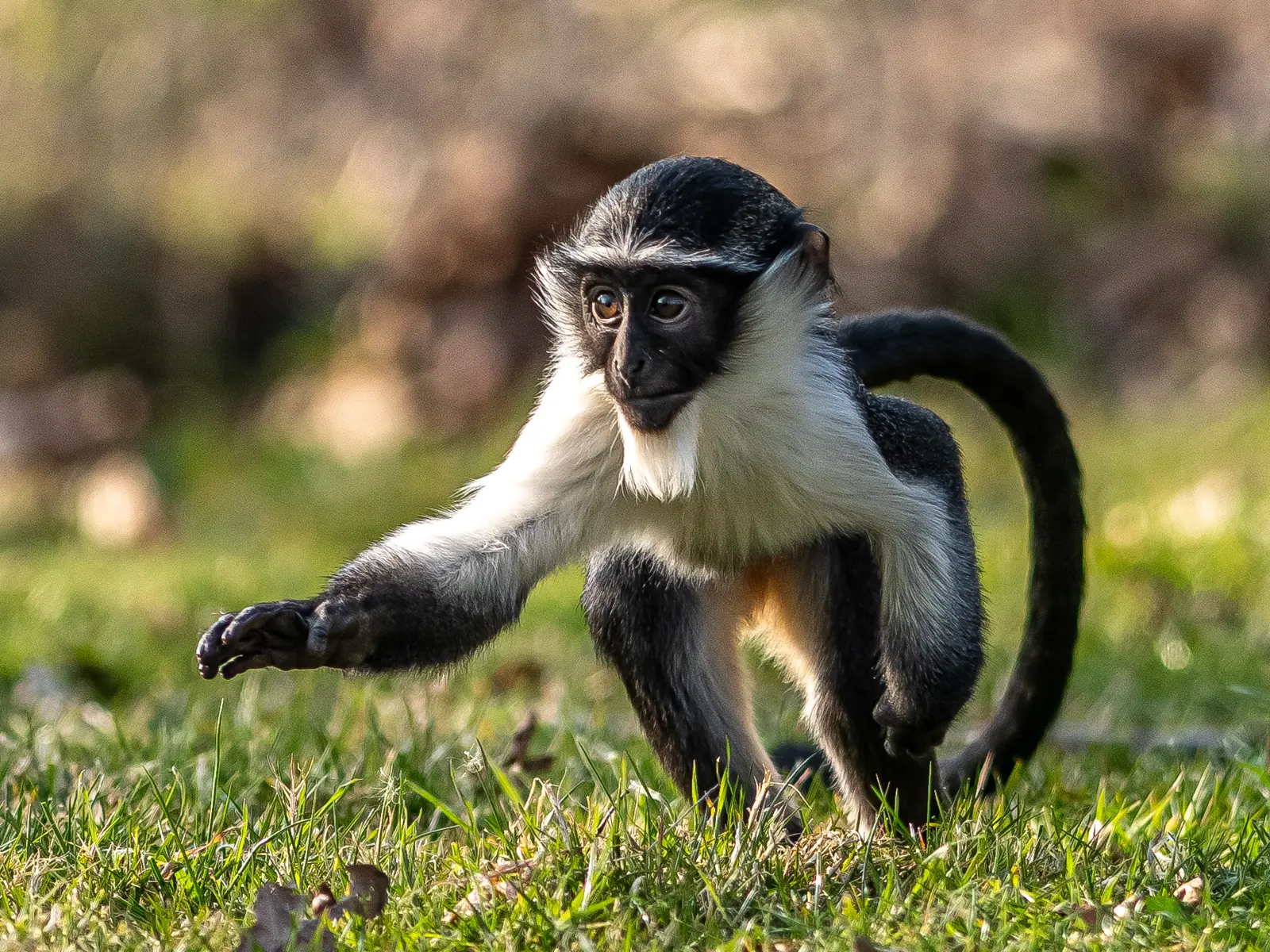
The Roloway Monkey is known for its distinctive black-and-white fur, expressive face, and remarkable agility in the forest canopy. It spends much of its life high among the trees, feeding on fruits, seeds, leaves, and insects while helping maintain the health of its ecosystem. Unfortunately, shrinking forests and increasing human activities have pushed this remarkable primate closer to extinction.
Its story reminds us that many conservation crises happen quietly. Unless we continue to protect wildlife, strengthen wildlife conservation, and increase animal extinction awareness, species like the Roloway Monkey may disappear before many people even learn they exist.
Table of Contents
Wake-Up Call 1: A Home That Keeps Getting Smaller
The Roloway Monkey depends on dense tropical forests for food, shelter, and protection. However, these forests continue to disappear because of logging, farming, and expanding human settlements.
As forest patches become smaller, this endangered species loses the space it needs to survive. Small, isolated habitats make it harder for monkey groups to find food and reproduce successfully. To help save wildlife, protecting remaining forests must become a priority before even more habitat is lost.
Wake-Up Call 2: Hunting Remains a Serious Threat
Habitat loss is not the only danger. In several parts of West Africa, hunting continues to reduce Roloway Monkey populations. Some are hunted for bushmeat, while others become victims of illegal wildlife trade.
Even small losses have a major impact because so few individuals remain. This is why animal extinction awareness is essential. Understanding the consequences of hunting helps communities and policymakers work together to reduce unnecessary pressure on vulnerable wildlife.
Wake-Up Call 3: Small Populations Face Bigger Challenges
Today, Roloway Monkey populations are scattered across isolated forest fragments. These separated groups have fewer opportunities to breed, increasing the risk of reduced genetic diversity.
For any endangered species, this creates long-term challenges. Smaller populations are generally less resilient to disease, environmental changes, and natural disasters. Effective wildlife conservation must focus on keeping habitats connected so wildlife can move freely and maintain healthy populations.
Wake-Up Call 4: Every Forest Species Has a Purpose
The Roloway Monkey is much more than another primate living in the trees. As it feeds, it spreads seeds throughout the forest, helping new plants grow and supporting the natural regeneration of the ecosystem.
Without species like the Roloway Monkey, forests gradually lose some of their natural balance. To protect wildlife, we must also recognize the important ecological roles that even lesser-known animals perform every day.
Wake-Up Call 5: Climate Change Is Adding More Pressure
Changing weather patterns are making tropical forests less predictable. Shifts in rainfall and temperature affect fruit production and other food sources the Roloway Monkey depends on.
Climate change adds another layer of difficulty for this endangered species, making survival even more uncertain. Stronger wildlife conservation strategies must prepare for these environmental changes while protecting critical habitats.
Wake-Up Call 6: Conservation Cannot Focus Only on Famous Animals
Many conservation campaigns naturally attract attention by highlighting elephants, tigers, or gorillas. While these efforts are valuable, lesser-known species like the Roloway Monkey often receive far less recognition.
Greater animal extinction awareness helps people understand that every species contributes to biodiversity. To help save wildlife, conservation efforts must include animals that rarely appear in the spotlight.
Wake-Up Call 7: Local Communities Play a Vital Role
The future of the Roloway Monkey depends not only on governments and conservation organizations but also on the communities living near its habitat.
Sustainable farming, responsible forest management, and conservation education can all reduce pressure on local ecosystems. When communities become active partners in conservation, it becomes much easier to protect wildlife for future generations.
Wake-Up Call 8: There Is Still Time to Change the Story
Although the Roloway Monkey remains one of Africa’s most threatened primates, its story is not over. Protected forests, anti-poaching measures, and conservation programs have shown that wildlife can recover when given the chance.
Every effort to help save wildlife contributes to protecting not only one species but also the forests that countless other animals depend on. Continued wildlife conservation offers hope that this remarkable primate can remain part of West Africa’s natural heritage.
Why the Roloway Monkey Still Matters?
The Roloway Monkey represents far more than a single endangered species. It symbolizes the rich biodiversity of West Africa and the delicate balance that healthy forests provide. When one species disappears, the effects can ripple throughout the ecosystem.
Choosing to protect wildlife means protecting the forests, plants, insects, birds, and mammals that all depend on one another. By strengthening animal extinction awareness and supporting effective wildlife conservation, we can give the Roloway Monkey a better chance at survival while preserving one of Africa’s most valuable ecosystems.
Last Words of Encouragement
Every endangered species deserves a future, even those that rarely make headlines. The Roloway Monkey reminds us that conservation is not only about protecting famous animals but also about preserving the incredible diversity that keeps nature in balance.
When we choose to protect wildlife, support stronger wildlife conservation, increase animal extinction awareness, and continue to help save wildlife, we become part of a larger effort to ensure that future generations inherit forests filled with life rather than silence.
Frequently Asked Questions (FAQ)
1. Why is the Roloway Monkey considered an endangered species?
The Roloway Monkey is an endangered species because of habitat loss, hunting, and declining forest ecosystems across West Africa.
2. Why is wildlife conservation important for the Roloway Monkey?
Wildlife conservation protects the forests the Roloway Monkey depends on while supporting long-term population recovery.
3. How does the Roloway Monkey help its ecosystem?
The monkey helps spread seeds throughout the forest, supporting natural forest regeneration and healthier ecosystems.
4. Why is animal extinction awareness important?
Animal extinction awareness encourages people to understand the challenges wildlife faces and inspires stronger conservation efforts.
5. How can people help save wildlife like the Roloway Monkey?
People can help save wildlife by supporting conservation organizations, protecting forests, reducing demand for illegal wildlife products, and spreading awareness about endangered species.